
Art as Regulation, Resistance, and Refusal
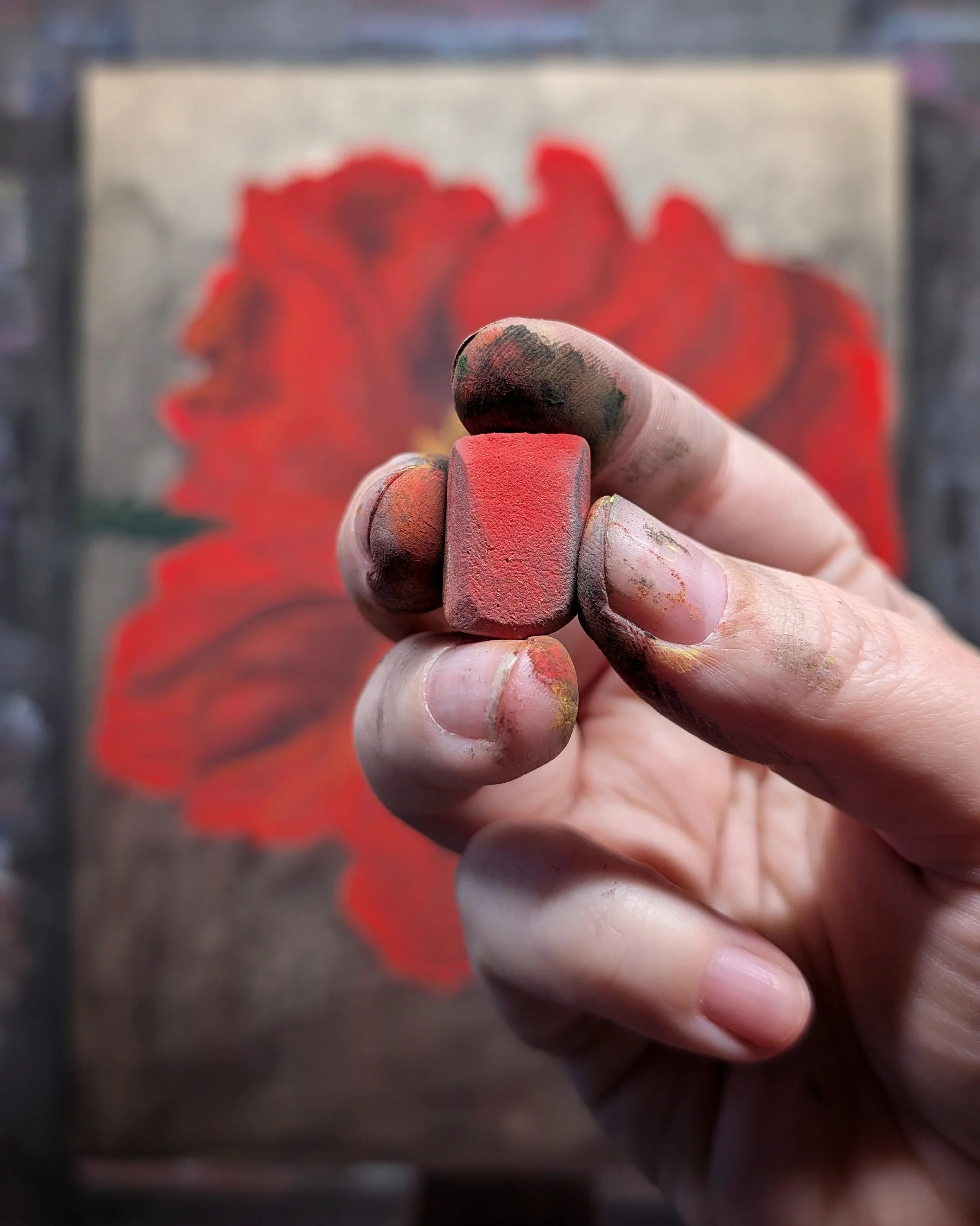
When the world feels heavy, I turn to art.
Not because it fixes anything. Not because it explains what’s happening. But because it brings me back into my body. Back into the middle. Back into something that feels steady enough to breathe inside.
When I say art regulates me, I mean it quite literally. I’m no longer grasping for meaning at an emotional extreme or a logical one; I’m allowing both to exist at the same time. Somewhere in that overlap is what I think of as wise mind. Art has always lived there for me. It has settled my nerves during panic attacks, cooled my jets when I’m triggered, and reminded me who I am when the noise gets too loud.
Soft pastels, especially, add another layer. There’s something almost ASMR-like about them, the drag of pigment, the dust, the blending. They slow me down. They make me present in my own presence. And right now, that feels like no small thing.
When I don’t make art during hard seasons, I don’t process the world very well. I become more reactive. Easier to anger. Those feelings tell me I care, but they also leave me feeling stuck, almost caged. Creativity gives those emotions somewhere to go. It lets them move through me instead of taking up permanent residence.
And yes, sometimes it feels strange to make art when things are burning. Necessary and strange at the same time. If this sounds familiar, if you’ve felt the pull to create, rest, or notice while also feeling unsure about it, you’re not alone.
I don’t use creativity to bypass what’s happening. I let the emotions come. I let the grief, fear, and overwhelm rise up. But art, whether it’s painting, baking, or making music, gives me a controlled, predictable way to metabolize those feelings. It helps me come back to center so I can stay engaged instead of shutting down.
This is where I believe art carries responsibility.
Art helps us speak. It helps us regulate. It helps us tell the truth, or sometimes recognize a lie. It can hold joy and fear at once. That kind of power isn’t neutral. Even choosing what to make, and how, is a form of meaning-making.
Which means art is political, whether we want it to be or not.
Not in the slogan sense. In the existence sense.
Who gets to make art? Who gets to rest, to create, to be seen? Choosing softness, slowness, care, land, noticing, those aren’t accidental choices. They are embodied ones. Subtle, maybe. But intentional.
I’m drawn to a kind of resistance that doesn’t yell.
The resistance that feels true to me lives in the details. Artists are smart. We decide what to include and what to leave out. We can augment or diminish meaning with a single choice. Resistance becomes performative, in my opinion, when the oppressor is centered completely. I can center myself to stay sane, and I am not the center of what is happening! Quiet resistance, on the other hand, asks you to come closer.
Small art is intimate. You don’t absorb it all at once. You have to lean in. You have to notice. And in that closeness, something shifts. This is the heart of why I believe in small art—why projects like Wild Tiny Things exist—not to shout over the noise, but to give you something steady to return to.
This is why I believe living with art matters, especially now.
Art in your home can become a regulatory tool. Not because it’s decorative, but because of the story it holds. Why you chose it. Where it came from. What it reminds you of. When you pause in front of a piece and tell yourself that story, you’re already back in the present moment!
Sometimes, regulation is sensory, too. Five things you can see. Four you can hear. Three you can smell. Two you can feel. Maybe even one you can taste. Doing that with art in front of you, really looking at it, is deeply nurturing. It invites your body to settle, not just your mind.
If you feel guilty for seeking beauty, I want to gently challenge that.
Seeking beauty is normal. It’s biological. Our brains are designed to protect us, and beauty is part of that reflex. It helps us orient toward safety and meaning. That’s not indulgent, it’s human!
When I think about my own landscapes, what I hope they offer you is perspective. Expanse. Freedom. I paint as if I’m standing at the edge of a field or a grassline, because I want you to feel that edge too. The world is bigger than the moment we’re in. I forget that often, until I paint it.
News rarely reassures us. Scrolling can be demoralizing. Productivity dries up under that weight. But art, art lets you take up space again. It reminds you that freedom can live inside your home, your body, your breath.
So we keep noticing.
Even now.
Especially now.
Noticing brings us back into the here and now. It can soften anxiety. It can interrupt depression. It isn’t easy, and art and creativity make it more accessible. Regulating ourselves may be one of the most powerful responses we have to the stressors of this world.
I know my business tasks slow down when the urge to create gets louder. And I’ve made peace with that. I refuse to give up creativity. If I’m not painting, you might find me baking, playing my trombone, or walking trails with my family. Those are not distractions; they’re part of how I stay whole.
Because for me, art is resistance. Just like art is joy.
It’s my refusal to give in to hate. My refusal to stop believing in a better future, for my family, for others, for myself. Art is how I say no to dishonor and lies meant to shrink people down. It’s how I keep showing up with hope.
And if my work gives you a place to pause, breathe, and feel a little more expansive—then it’s doing exactly what I believe art is meant to do.